By Engr. Emmanuel Okpong
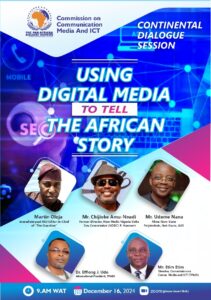
On December 16, 2024, the Commission on Communication, Media and ICT of The Pan-African Dialogue Institute (TPADI) held a high-impact Continental Dialogue Session that brought together leading voices in journalism, new media, and Pan-African communication.
The central theme:
“Using Digital Media to Tell the African Story”
addressed one of Africa’s most pressing contemporary challenges—shaping its own narrative in a world where digital platforms often distort, oversimplify, or silence the continent’s realities.
This landmark event explored how Africans can reclaim narrative ownership, amplify authentic voices, and use digital tools to tell stories that reflect the continent’s richness, complexity, and humanity.
Opening Remarks: A Call for Narrative Sovereignty
Dr. Effiong J. Udo, International President of TPADI, opened the dialogue with a powerful reminder that Africa’s image is one of its most strategic assets.
He emphasized that for too long, the continent’s story has been told by external actors—often through lenses of poverty, conflict, and stereotypes. With digital media democratizing communication, Africans now have unprecedented opportunities to rewrite the script and project a more truthful, empowering narrative.
Insights From Distinguished Speakers
Martin Oloja
Immediate Past MD/Editor-in-Chief, The Guardian (Nigeria)
Martin Oloja delivered a compelling critique of Western media framing and its long-standing influence on global perceptions of Africa.
He stressed the urgent need for Africans to produce high-quality digital journalism, invest in credible online platforms, and challenge misinformation that undermines the continent.
His emphasis on “narrative responsibility” resonated strongly with participants.
Mr. Chijioke Amu-Nnadi
Former Director, New Media, NDDC, Port Harcourt (Nigeria)
Amu-Nnadi brought an artistic, poetic, and deeply reflective perspective.
He highlighted storytelling as a cultural weapon—one that shapes identity, fuels community memory, and preserves African worldview.
He urged Africans to embrace digital creativity—video, photography, poetry, microblogging—to reclaim their voice and document their journey.
Mr. Udeme Nana
Akwa Ibom State Polytechnic, Ikot Ekpene, Nigeria
Mr. Nana examined the intersection of digital media and civic engagement.
He emphasized how digital platforms can strengthen democracy, accountability, and public education. He also cautioned against the dangers of misinformation, online toxicity, and the absence of digital literacy in many African communities.
Mr. Etim Etim
Director, Commission on Communication, Media and ICT, TPADI (Nigeria)
Etim Etim discussed strategic communication and content development as tools for Pan-African unity.
He stressed the need for coordinated institutional storytelling—where governments, cultural bodies, and youth collectives actively shape Africa’s narrative online.
Key Themes That Emerged
1. Africa Must Control Its Digital Identity
Participants agreed that Africa’s global image will not change until Africans become primary storytellers of their own lives and histories.
2. Digital Media Is a Tool of Liberation
From TikTok to podcasts, the digital ecosystem offers Africans the power to bypass traditional gatekeepers and speak directly to global audiences.
3. Authenticity Builds Power
The African story must be told with honesty—highlighting both triumphs and challenges, but always through African eyes.
4. Misinformation Is a Threat to African Progress
Speakers warned of the weaponization of false narratives across digital spaces, calling for stronger fact-checking and media literacy.
5. Collaboration Strengthens Narrative Impact
Journalists, content creators, historians, artists, and policymakers must work together to create a unified and influential African voice online.
Audience Engagement: A Pan-African Digital Community
Participants from across the continent and diaspora shared reflections on:
-
how Africa is portrayed abroad,
-
the challenges of content monetization,
-
opportunities in citizen journalism,
-
and the need for digital training for young Africans.
Many expressed strong motivation to begin telling their own stories online—blogging, podcasting, creating documentaries, or using everyday social media platforms.
Conclusion: Reclaiming the African Voice
The session concluded with a reaffirmed commitment to building a new generation of African digital storytellers who are confident, informed, ethical, and Pan-African in worldview.
TPADI’s Commission on Communication, Media and ICT pledged to continue developing programs that empower Africans with the skills and platforms needed to amplify the African narrative.
Africa’s story is Africa’s responsibility. And digital media is the pen of this generation.
Acknowledgments
We extend heartfelt appreciation to all speakers, facilitators, and participants who contributed to this enriching dialogue.
Together, we move closer to an Africa that speaks for itself—and is heard.