By Engr. Emmanuel Okpong
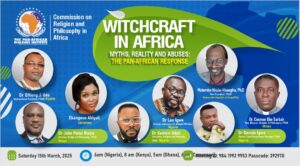
On Saturday, 15th March 2025, the Commission on Religion and Philosophy in Africa under The Pan-African Dialogue Institute (TPADI) successfully hosted a groundbreaking webinar on one of the continent’s most sensitive and misunderstood subjects:
“Witchcraft in Africa: Myths, Reality and Abuses — The Pan-African Response.”
Held across multiple time zones—from Nigeria to Kenya, Ghana, and Cameroon—the session brought together scholars, activists, philosophers, religious thinkers, and community advocates to unpack the historical, cultural, and political complexities surrounding witchcraft beliefs in Africa.
This conversation was not only timely but necessary, considering the alarming rise of witchcraft-related violence, stigmatization, and human rights violations across the continent.
Opening Address
Dr. Effiong J. Udo, International President of TPADI (Nigeria), set the tone with a powerful reminder that while witchcraft beliefs are deeply embedded in African societies, misconceptions and weaponized narratives often lead to injustice, abuse, and violence—particularly against women, children, the elderly, and persons with disabilities.
He emphasized the need for balanced scholarship, human-rights-driven advocacy, and culturally sensitive interventions.
Key Contributions from Panelists
Ekangouo Abigail (Cameroon)
Abigail shared heartfelt insights on how witchcraft accusations impact vulnerable groups in Central Africa. She emphasized the psychological trauma inflicted on victims and the urgent need for community education and legal safeguards.
Dr. John Peter Bwire (Kenya)
Director, Religion & Philosophy, TPADI
Dr. Bwire examined the philosophical foundations of witchcraft beliefs in African cosmology. He traced the origins of these ideas, explaining how fear, misfortune, and cultural narratives shape people’s interpretations of unexplained events.
Dr. Leo Igwe (Nigeria)
Director, Advocacy for Alleged Witches
Dr. Igwe delivered one of the most critical presentations, spotlighting real cases of abuse, torture, and extrajudicial punishment stemming from witchcraft allegations. He argued strongly for legal reforms, better policing, and public enlightenment campaigns to protect the innocent.
Dr. Godwin Udoh (Nigeria)
Secretary, Religion & Philosophy, TPADI
Dr. Udoh reflected on the spiritual, moral, and sociological implications of witchcraft accusations. He highlighted the tension between tradition and modernity, urging Africans to adopt a rational, ethical, and rights-respecting approach.
Mutombo Nkulu-N’Sengha, Ph.D (DRC/USA)
Vice President, TPADI
Prof. N’Sengha provided a philosophical and historical audit of witchcraft beliefs within African and global contexts. His contribution emphasized the need to deconstruct colonial distortions while addressing harmful practices embedded in cultural systems.
Dr. Cosmas Ebo Sarbah (Ghana)
Deputy Director, Religion & Philosophy, TPADI
Dr. Sarbah discussed the legal and policy frameworks required to address witchcraft-related abuses, especially in Ghana and West Africa. He underscored the responsibility of governments, NGOs, and traditional rulers.
Dr. Dennis Igwe (Nigeria)
Deputy Chief Programme Manager, TPADI
Dr. Igwe provided solutions-oriented perspectives, focusing on how education, media literacy, interfaith dialogue, and youth engagement can help dismantle myths and protect communities from harmful stigmatization.
Key Themes That Emerged
1. Witchcraft Beliefs Are Deeply Cultural but Often Misunderstood
Panelists noted that witchcraft accusations often stem from fear, ignorance, illness, poverty, or misfortune—not actual evidence.
2. Abuses Connected to Witchcraft Accusations Are a Human Rights Crisis
Children, widows, and elderly persons are disproportionately harmed.
3. Colonial History and Religion Have Complicated Indigenous Beliefs
Misinterpretations from missionaries and colonial institutions contributed to extreme stigmatization.
4. Legal and Social Interventions Are Urgently Needed
Participants emphasized strengthening legal systems, community education, and public health responses.
5. A Pan-African Approach Is Required
Addressing this issue demands collaboration across academic, sociocultural, legal, and governmental sectors.
Audience Engagement
The webinar generated highly interactive discussions. Participants shared personal stories from various African countries, highlighting the pain caused by wrongful accusations and the need for urgent reforms.
The cross-cultural perspectives enriched the dialogue and reinforced the continental nature of the problem.
Conclusion: Toward a Safer, Enlightened, and Rights-Respecting Africa
The Commission on Religion and Philosophy in Africa affirmed its commitment to:
-
advocating for victims of witchcraft-related abuses,
-
promoting evidence-based and ethical interpretations of African belief systems,
-
collaborating with governments and communities,
-
and fostering Pan-African research and dialogue on religion and culture.
Africa must confront harmful practices without rejecting the rich philosophical and spiritual heritage of the continent.
The webinar marks a significant step in shaping a humane, informed, and Pan-African response.
Appreciation
We extend heartfelt gratitude to all speakers, moderators, and participants for their contributions to this transformative dialogue.
Together, we move toward a future where every African—regardless of age, gender, or background—is safe from stigma, violence, and wrongful accusation.